
When comparing house prices, are we really comparing like with like?
When choosing a prefabricated house, comparing offers is perfectly reasonable. However, a similar floor area, a similar layout and the same stated level of completion do not necessarily mean that the houses are truly comparable. The differences are often hidden precisely where they are not immediately visible.
Before comparing two offers, ask yourself five questions:
1. Do both offers genuinely include the same scope of work?
2. Am I comparing materials and technical solutions of the same quality level?
3. What is the building’s energy, thermal, acoustic and structural performance?
4. What happens after the contract is signed – who will guide me through the design, construction and any potential challenges?
5. What value will my decision retain in 10, 20 or 30 years?
When choosing a home, we are not choosing based on price alone. We are choosing the quality of the space in which we will live for decades.


We understand this when buying cars. Why should houses be any different?
In the automotive industry, we take it for granted that two cars should not be compared solely by their size and price. Two cars may have five seats, similar exterior dimensions and engines of comparable power. On paper, they may appear very similar. Nevertheless, we understand why there can be a significant difference in price.
The difference lies in the materials, technology, safety, build quality, comfort, equipment, development, after-sales service, reliability and expected service life. Why should we look at a house differently when it is a far more complex product and one that we generally purchase only once in a lifetime?
Two prefabricated houses with a floor area of 150 m² are not necessarily comparable simply because they are the same size, feature similar architecture and are both described as “turnkey”.
Behind their finished appearance may be completely different structural systems, wall assemblies, insulation materials, windows, heating and ventilation systems, construction details and quality standards.
Just as we do not buy only four wheels, an engine and a body when purchasing a car, we do not buy only square metres, walls and a roof when purchasing a house. We are buying a complete system. This is precisely why comparing only the final price can be highly misleading.
Not all square metres are equal
When comparing offers for prefabricated houses, our attention often goes first to the final price. One offer amounts to X and another to Y. If the houses have approximately the same floor area, the decision may seem straightforward.
However, the price alone does not reveal what we are actually buying. Behind walls, ceilings and façades that may look almost identical in photographs, there may be entirely different structural solutions, materials and systems. These have a significant impact on living quality, energy efficiency, durability and the long-term value of the house.
What should you compare? At Marles, we advise our customers to look well beyond the total price when comparing offers. Particular attention should be paid to:
The greatest differences are often invisible
We can see and touch the parquet flooring, tiles and façade finish. However, many far more important parts of the house will never be visible again once construction is complete.
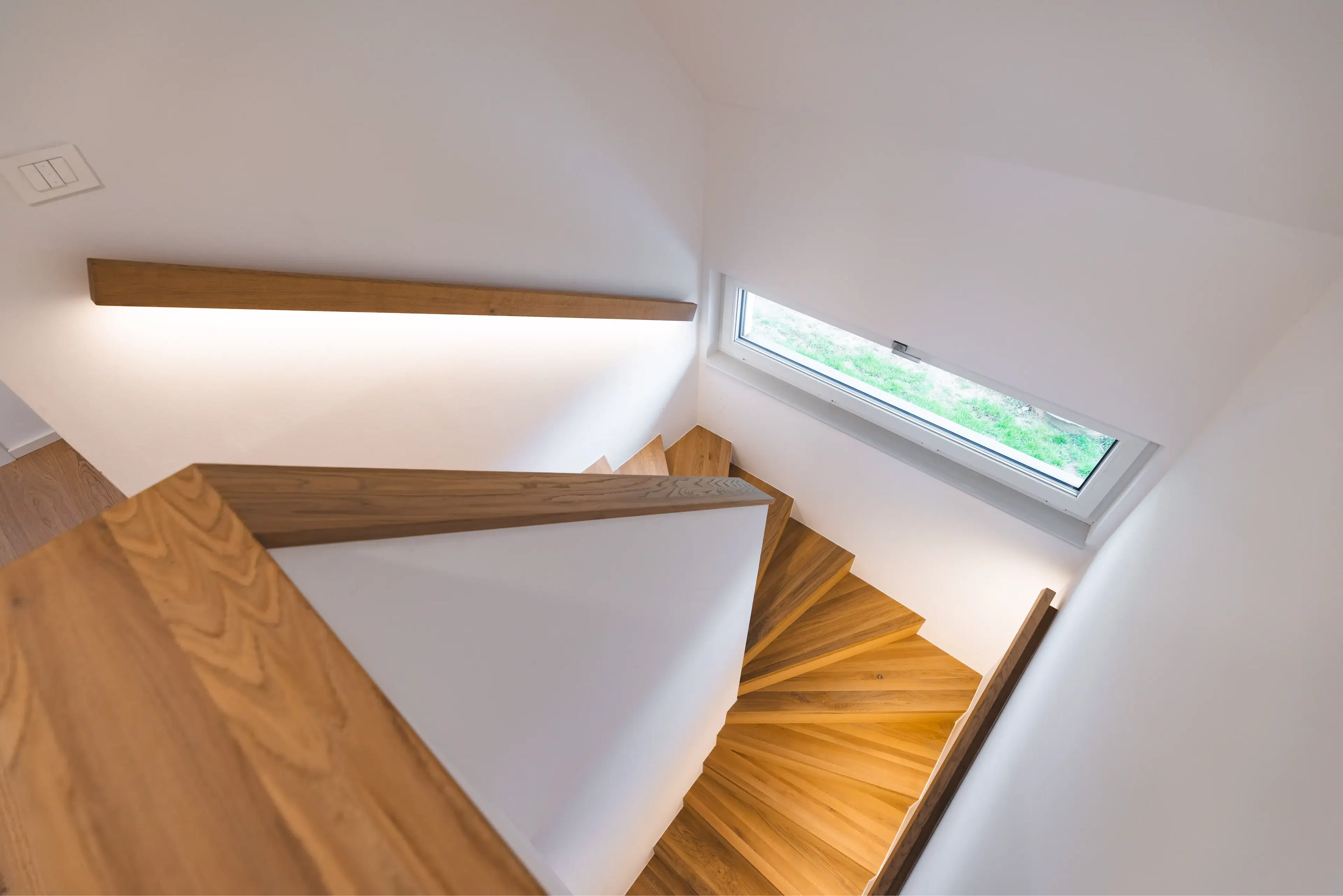
What is inside the walls? How are the individual elements joined? What type of structure is used? How are the details designed to prevent thermal bridges? Which materials are installed in places that will be concealed by the final finishes after completion?
This is why assessing the quality of a house primarily by its appearance, floor area and final price can be risky. In a house, the most important elements are often those that are no longer visible once construction is complete.

What does “turnkey house” actually mean?
Terms such as “turnkey”, “partially finished” or “advanced shell” do not necessarily mean the same thing across all providers. A particular solution may already be included in the basic price of one offer while being charged as an extra in another. Materials, systems, equipment levels and the scope of services may also differ.
An offer that initially appears more affordable may therefore look quite different once all elements and the desired standard have been aligned. The right question is not simply: “How much does the house cost?” but rather: “What exactly do I receive for that price?”
We buy a house for decades
A difference of a few per cent in the initial investment may take on an entirely different significance in a long-term decision such as building a home. Energy efficiency affects future running costs, while the quality of materials and workmanship influences maintenance requirements. Well-designed structural details contribute to durability, and we experience the quality of the indoor environment every day.
The cheapest offer is therefore not necessarily the best value – just as the highest price alone does not guarantee quality. What matters is the relationship between price, quality, the content of the offer and long-term value.
At Marles, we do not view a house as a collection of square metres but as a complete system. Our houses are backed by decades of development, knowledge and experience in prefabricated timber construction. We select materials, structural systems and technical solutions with energy efficiency, durability, safety and living quality in mind.
We want our customers to understand what may not be visible at first glance when comparing offers – not to make one offer appear more or less expensive, but to ensure that we are truly comparing like with like.
Choose your Marles house today.