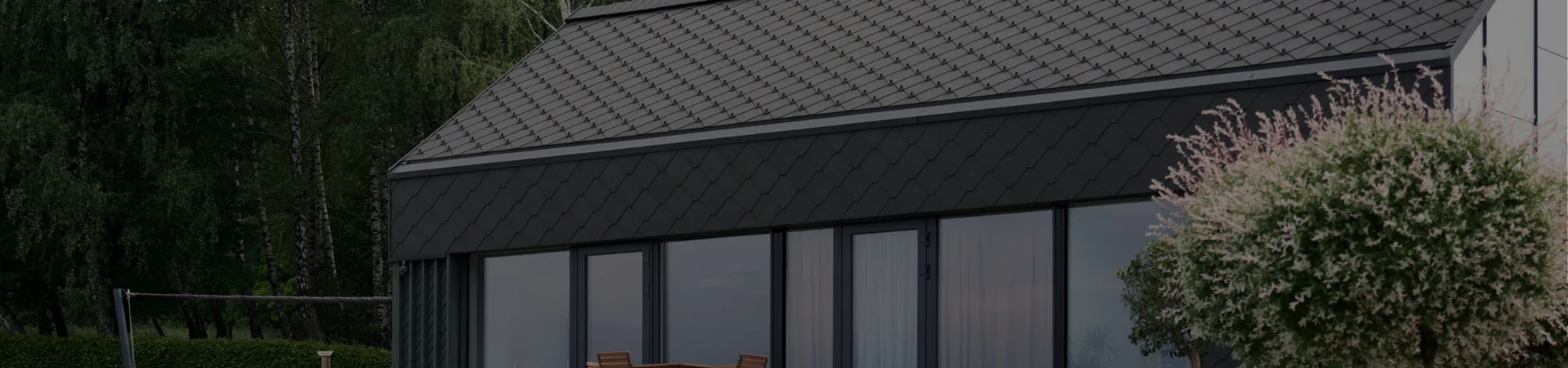
Ventilated aluminium façade: A modern look without maintenance
When choosing a façade, most homeowners first think about the appearance of their house. Should it look modern, warm, minimalist, premium or more classic? This is an important question, but it is not the only one.
A façade is much more than the outer “skin” of a house. It is the external protective layer of the building envelope and has a major impact on durability, maintenance, structural protection, moisture behaviour and the final architectural expression of the building.
This is why ventilated façades are increasingly used in modern timber prefabricated houses. A ventilated façade is a façade system in which an air cavity is positioned between the thermal insulation or structural wall and the external cladding. This air layer allows air circulation, helps remove moisture and improves the façade’s performance in different weather conditions.
Compared with a traditional rendered façade – an ETICS system with a plaster finish – a ventilated façade is technically more demanding. In the long term, however, it offers greater architectural freedom, a more robust outer layer and, in most cases, lower maintenance.
What is a ventilated façade?
A ventilated façade works according to the principle of an external protective layer, often referred to as a rainscreen system. The outer cladding takes on rain, sun, wind and mechanical exposure, while an air cavity remains between the cladding and the supporting structure, allowing air to circulate.
This means that the façade is not designed as one closed, bonded system, but as a composition of several functional layers:
The key advantage of this build-up is that any moisture can be removed more easily. The air cavity supports the drying of the structure and the insulation. This makes the system particularly suitable for timber prefabricated construction, where proper moisture management is one of the essential conditions for the long-term quality of the building.
Rendered façade or ventilated façade?
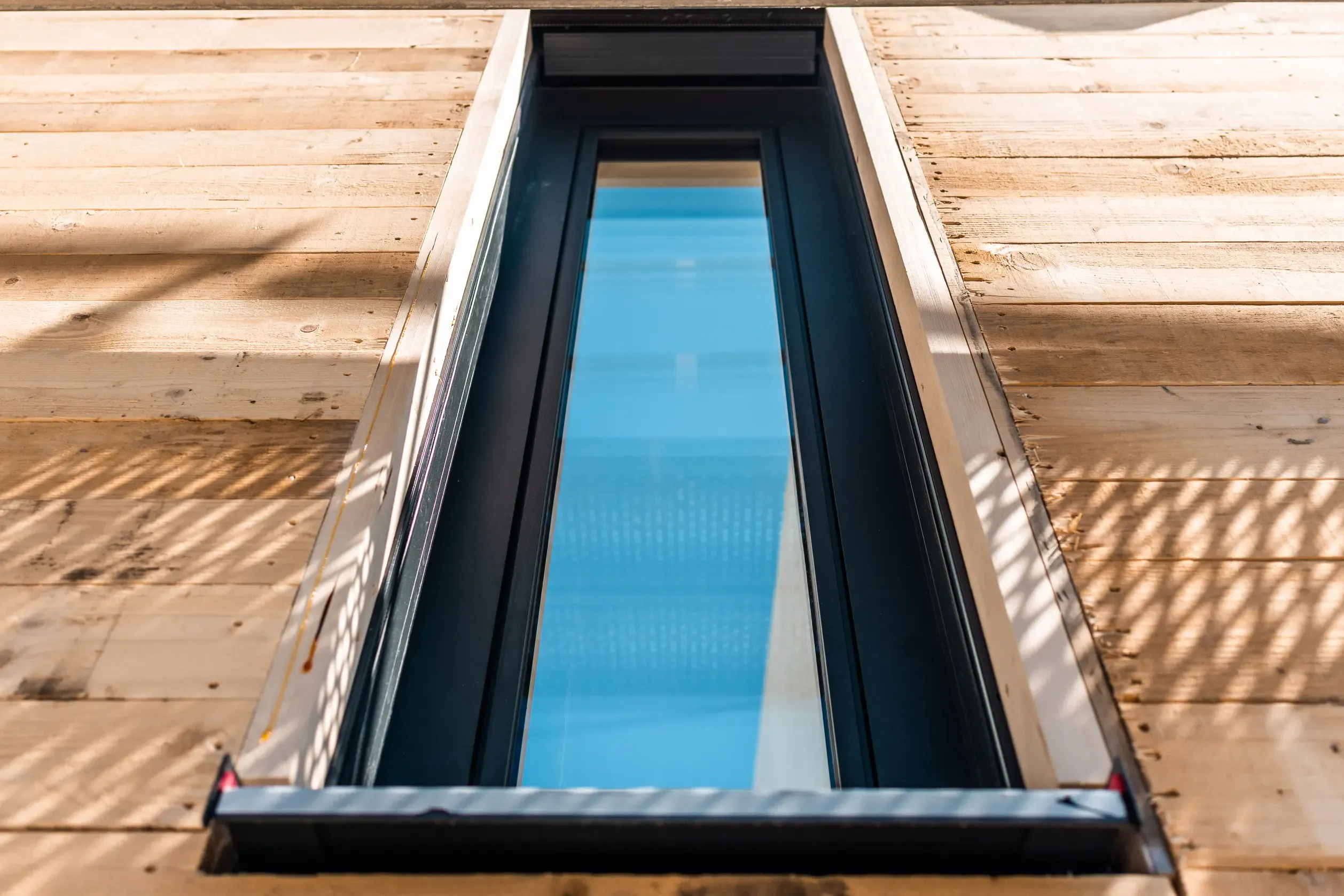
In a traditional rendered façade, or ETICS system, the thermal insulation is fixed directly to the wall. It is then covered with a reinforced base coat, mesh and final render. This is a proven, cost-effective and widely used solution.
A ventilated façade works differently. The final cladding is not directly bonded to the insulation, but separated from it by an air cavity. As a result, moisture and heat behave differently. In summer, part of the heat can be removed through the air cavity, which is especially useful with darker or metallic façade claddings. In winter, a properly designed façade system still remains an effective part of the thermal building envelope.
In simple terms:
- An ETICS façade is a good choice when a rational, proven and cost-efficient solution is required.
- A ventilated façade is the right choice when higher durability, a more contemporary architectural expression, a more resistant external cladding and greater design freedom are important.
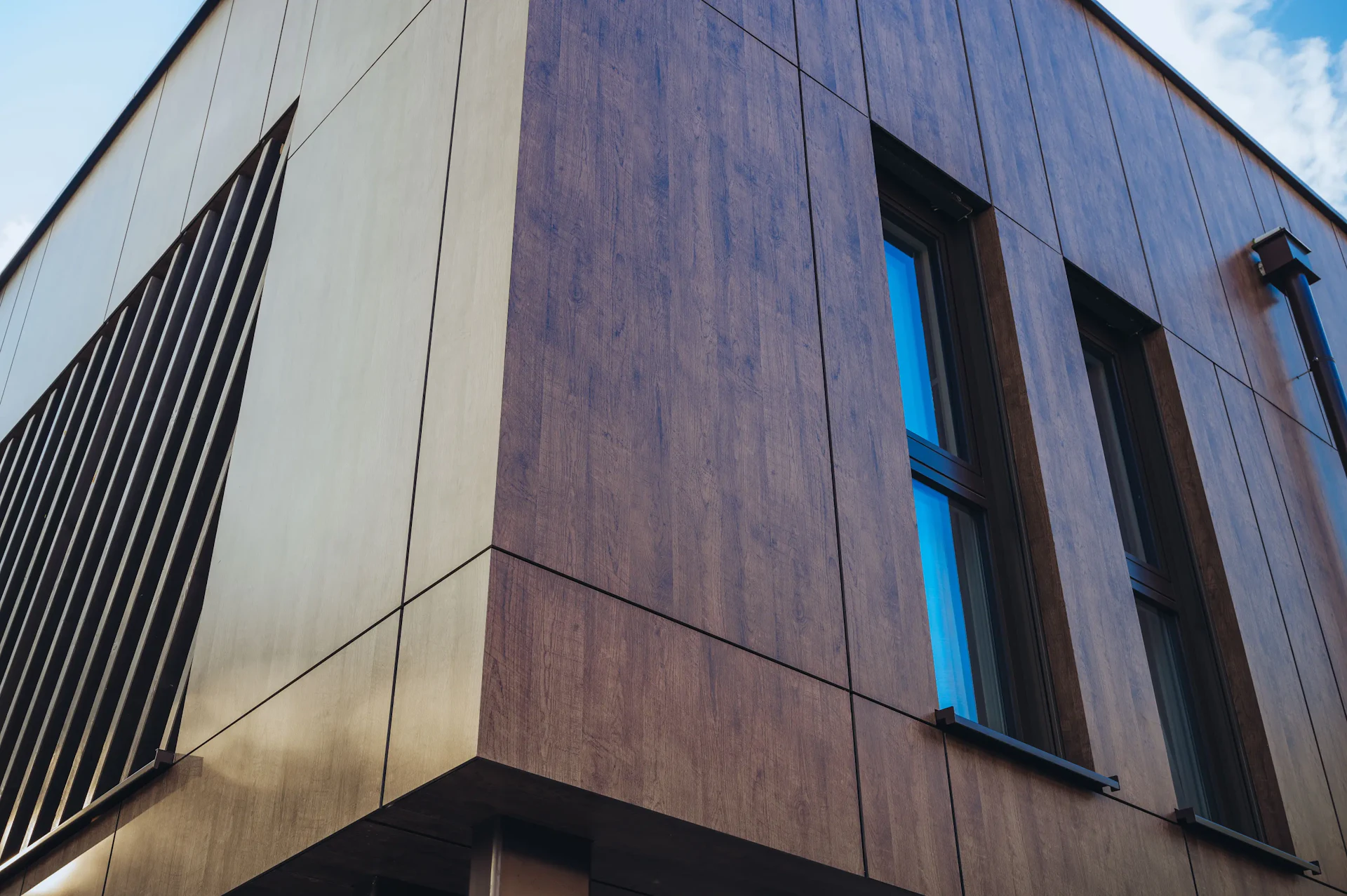
Why choose an aluminium façade?
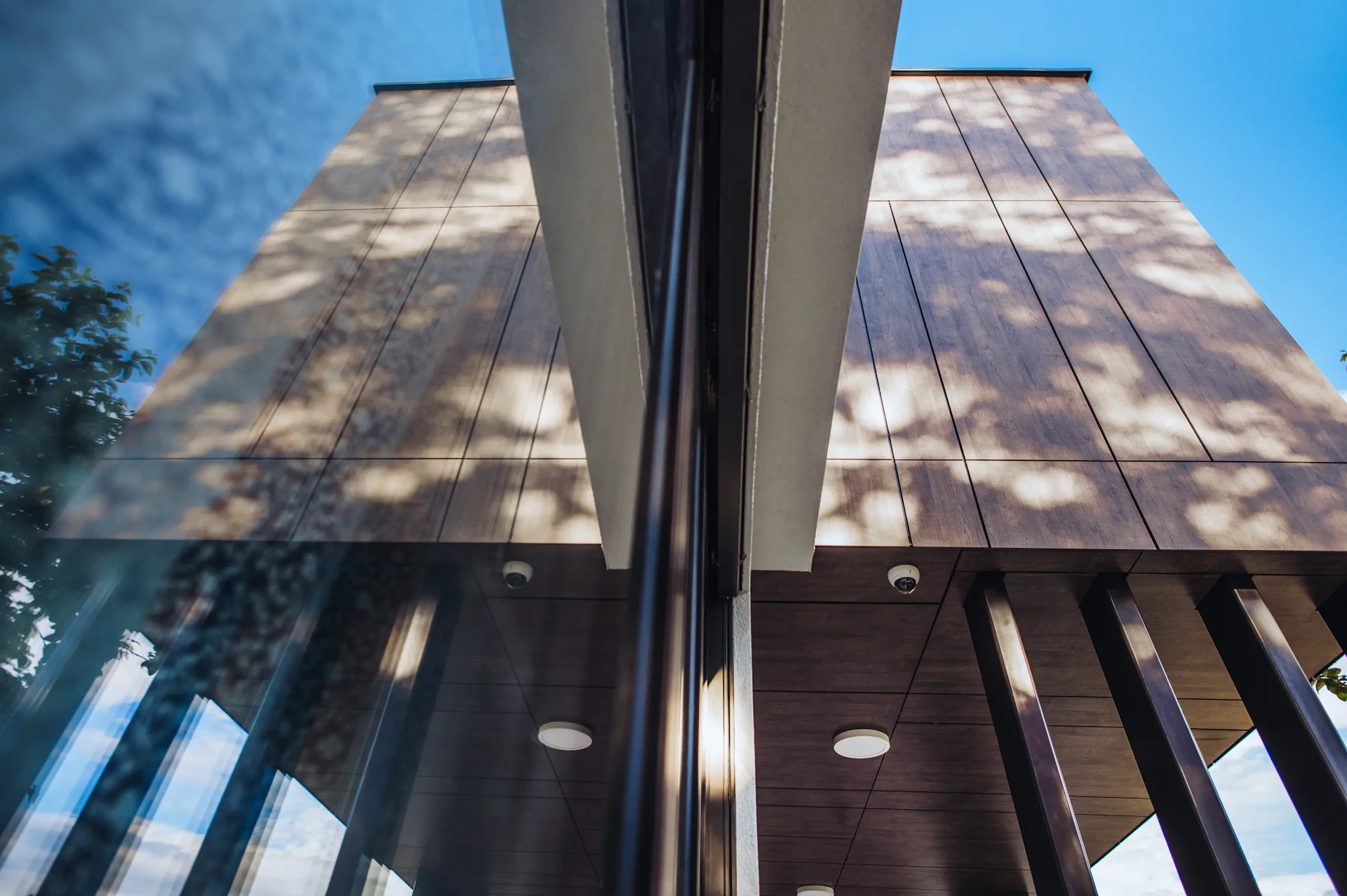
One of the most interesting options for ventilated façades is aluminium cladding. Aluminium is lightweight, corrosion-resistant, adaptable in design and highly suitable for contemporary architecture. PREFA presents its façade systems as aluminium systems for the external building envelope, available in different formats, colours and installation options.
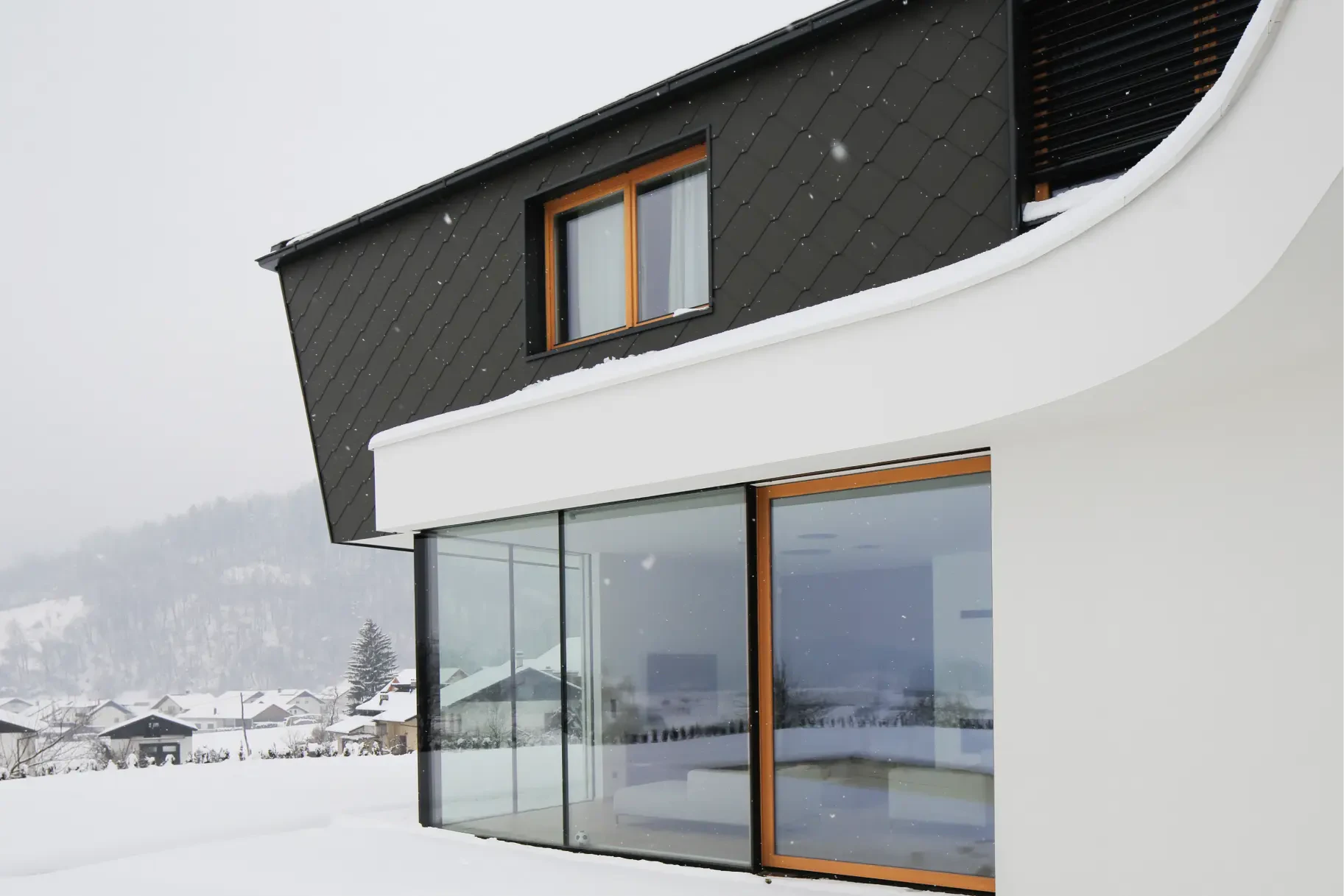
With systems such as PREFA sidings, façade elements can be installed horizontally, vertically or diagonally. This gives architects considerable freedom in design. At the same time, it is a non-load-bearing ventilated façade system, with space for air circulation between the structure and the aluminium cladding.
For homeowners, the key advantages of a ventilated aluminium façade are:
- modern, clean appearance,
- low maintenance,
- resistance to weather exposure,
- long service life,
- possibility of combining roof and façade in a similar material language,
- wide choice of colours, formats and installation directions.
PREFA states a 40-year guarantee on material and colour for its aluminium roofing and façade systems, which is an important factor when choosing a long-term façade solution.
Façade and roof as one architectural whole
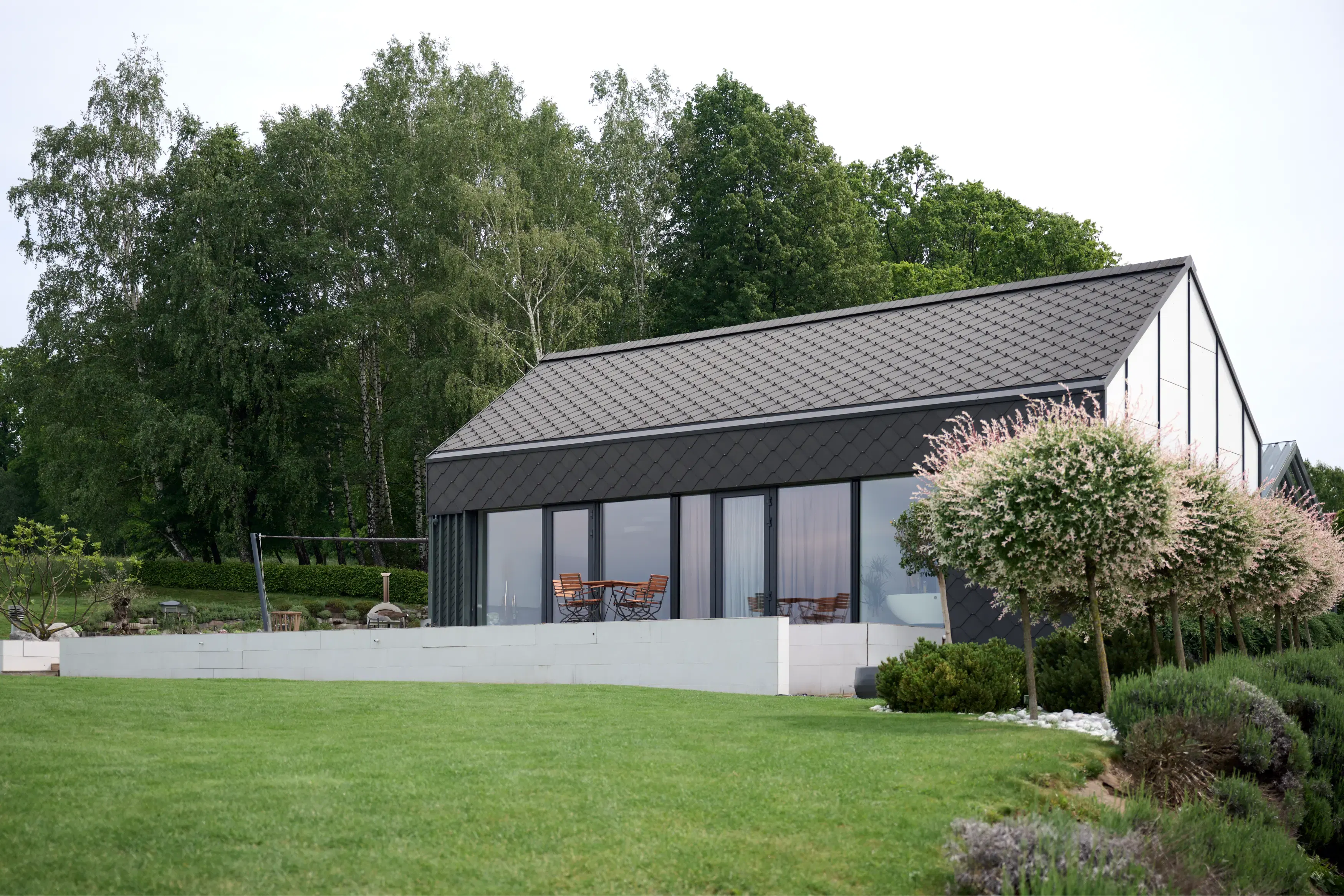
In modern family houses, the façade is increasingly no longer viewed separately from the roof. Contemporary architecture seeks unified lines, clean transitions and a more coherent appearance. Aluminium solutions for both roof and façade make it possible to connect the two into one continuous building envelope.
This is especially interesting for modern houses with mono-pitched roofs, clean lines, large glass surfaces or minimalist design. In such buildings, every joint, edge and finish becomes visible. This is why execution must be precise – because in this type of architecture, details cannot be hidden.
Why is façade preparation so important in a prefabricated house?
With a ventilated aluminium façade, choosing a high-quality material is not enough. Equally important is how the building is prepared for such a façade system.
In a timber prefabricated house, the façade system must be coordinated already during the design phase. This means that the external wall build-up, fixing method, air cavity, substructure, window details, corner details, roof junctions, plinth details and other connections must be defined in good time.
For high-quality execution, the following are particularly important:
- precise design of the building envelope,
- suitable substructure,
- correctly designed air cavity,
- thermally and fire-safe detailing,
- flat and stable substrate,
- properly executed details around windows, corners and roof junctions,
- full-surface boarding where required by the selected system.
With such façades, precision is essential. If the substrate is not flat, if details are not resolved in advance or if the façade is adapted only later on site, this quickly becomes visible in the final appearance and quality of execution.
Marles as a technical partner for more demanding façade solutions
At Marles, we do not see the façade as the final decorative layer, but as part of the overall technical concept of the house. In prefabricated construction, this is particularly important, because the quality of the building begins already in the design phase, in the production of timber elements and in the preparation of the structure.
Our task is to prepare the house in such a way that the selected façade system can be executed precisely, safely and without improvisation. This means that the timber structure, thermal insulation, substrate, air cavity, substructure and final façade cladding must all be technically coordinated.
With a ventilated aluminium façade, this is especially important because it is an architecturally very clean system. Straight lines, sharp edges, larger formats and metallic surfaces do not allow for poor execution. The quality of workmanship is therefore just as important as the quality of the chosen material.
Conclusion: a good façade begins beneath the surface
A ventilated aluminium façade is a modern, durable and architecturally expressive solution for prefabricated houses. It enables a clean appearance, greater design freedom, good moisture management and less maintenance throughout the building’s lifetime.
However, its quality does not depend only on the selected cladding. The complete preparation of the building is crucial: design, correct wall build-up, substructure, air cavity, flat substrate and precisely resolved details.
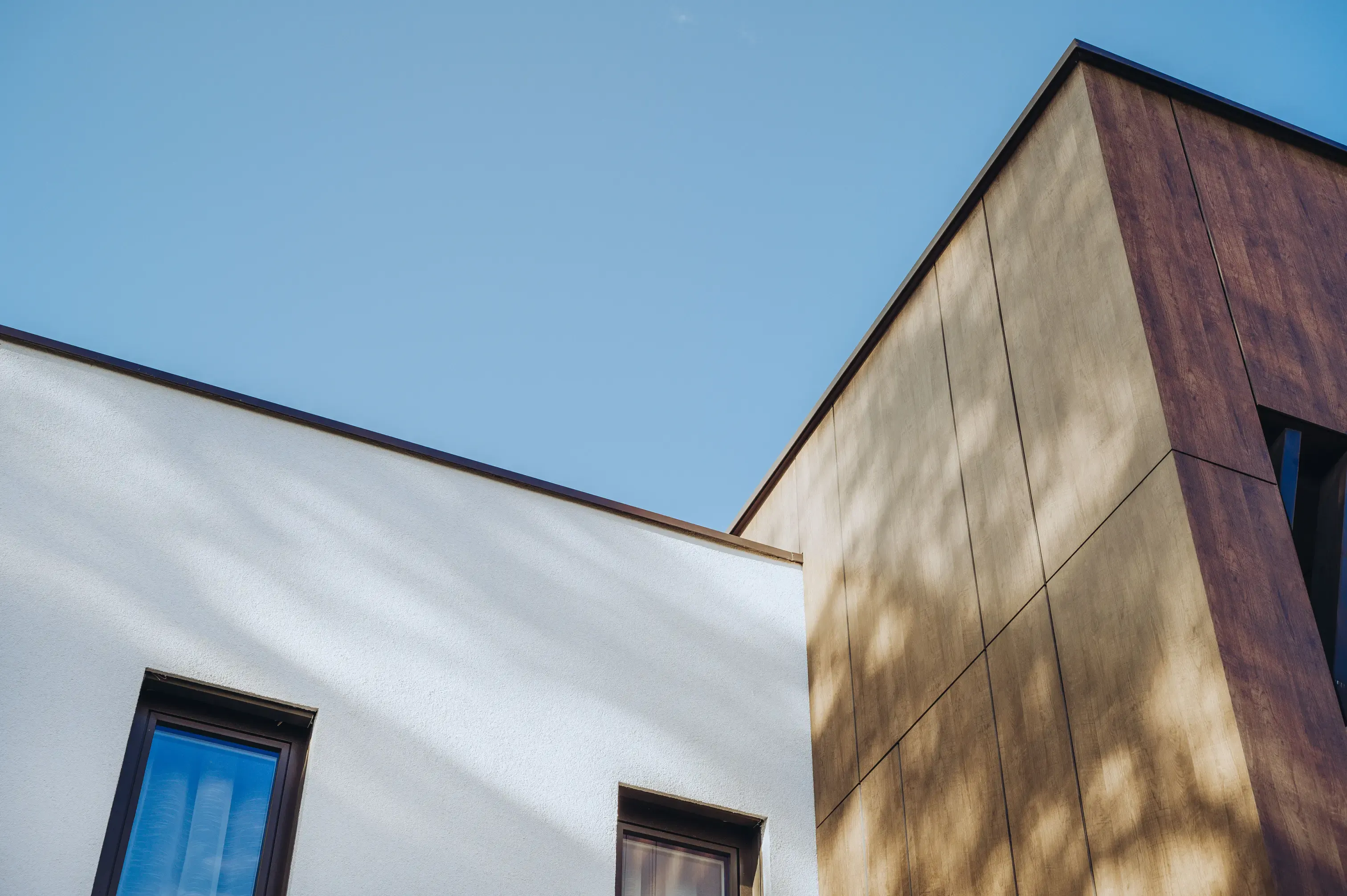
This is why it is important to choose a partner who understands both timber prefabricated construction and more demanding façade systems. At Marles, we approach such solutions holistically – as part of architecture, construction and long-term quality of living.
Because with a good house, it is not only important how it looks on the first day. What matters is how well it performs decades later.